There are two more weeks until the release of Placebos for Pets?, and the book is now the #1 New Release in veterinary medicine on Amazon! Thanks all for your support!
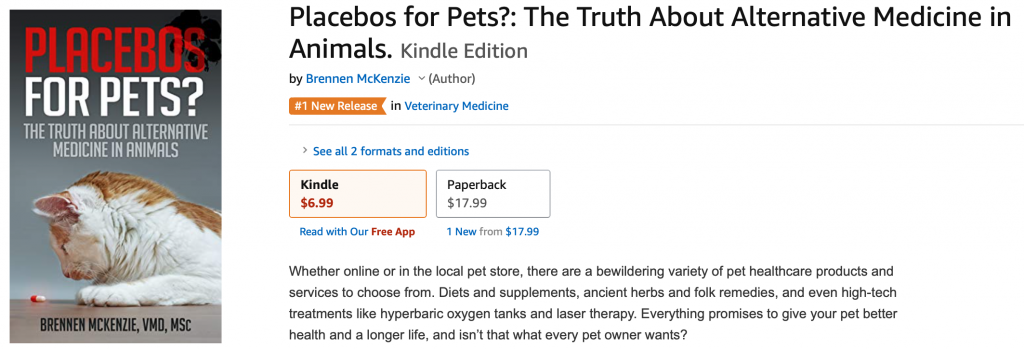

There are two more weeks until the release of Placebos for Pets?, and the book is now the #1 New Release in veterinary medicine on Amazon! Thanks all for your support!
My latest video from SkeptVetTV covering vaccine recommendations for cats. Below are some resources for further information.
American Academy of Feline Practitioners (AAFP) Vaccination Guidelines
World Small Animal Veterinary Association (WSAVA) Vaccination Guidelines
AAFP Guidelines for Feline Injection-Site Sarcoma (FISS)
Vaccine-associated feline sarcoma: current perspectives.
Feline Injection Site Sarcomas: Data from Switzerland 2009-2014.
The incidence of feline injection site sarcomas in the United Kingdom.
Acupuncture is one of the most well-known alternative therapies. While only 5-10% of Americans have had acupuncture treatment, most people are familiar with the practice, and surveys show many people, including medical professionals, have a positive view of acupuncture and its benefits.1–4
Like many other therapies, acupuncture has been adapted for veterinary use from its origins in human medicine, and it appears to be growing in popularity among pet owners and veterinary professionals. It is recommended in the American Animal Hospital Association pain control guidelines5 and included in the curricula and practice of a number veterinary colleges. Training programs in veterinary acupuncture are common, and lectures on the subject are included in most mainstream veterinary continuing education conferences.
You may be surprised, then, to learn that a sizeable number of scientists and clinicians in both human and veterinary medicine remain unconvinced of the benefits of acupuncture.6–8 This is not for want of research. There are thousands of published clinical trials investigating acupuncture in humans, and several dozen veterinary trials have been reported. However, not all research studies produce equally reliable and convincing results, and acupuncture is particularly challenging to study in a rigorous scientific manner.
Though I am certified in veterinary medical acupuncture and use the method in practice, I remain skeptical about its value. Whatever benefits acupuncture may have can only be identified if the uncertainties about the practice and associated research are understood and if reliable, high-quality research evidence is generated. Therefore, I want to highlight here some problems with the theory and practice of acupuncture and the research evidence used to justify it in order to balance the misleading information put forward by some proponents and the positive, but often uninformed, view many have about the practice.
The Roots of Acupuncture
Acupuncturists often claim veterinary acupuncture is an ancient Chinese practice. This is somewhat misleading. Acupuncture certainly originated in China long ago. However, it was originally a bloodletting practice which evolved over time into the modern treatment using ultrafine needles.6,9,10 The current collection of ideas, methods, and therapies included under the label Traditional Chinese Medicine (TCM) is actually a mélange of competing folk medicine traditions collated and marketed by the Chinese government under Chairman Mao for largely political reasons.11,6
The theoretical roots of TCM are a mix of Daoist, Confucian, Buddhist, and other religious and philosophical systems. The core concepts informing diagnosis and treatment involve balancing spiritual forces (e.g. Ch’i, Yin and Yang) and adjusting the strength and function of elements in the body corresponding to the elements that make up the universe (e.g. Fire, which is associated with the heart, summer, bitter flavors, and the early afternoon, and Wood, which is associated with the liver, sour flavors, springtime, and the early morning hours).6,9,10,12
Similar beliefs have underlain many pre-scientific systems of folk medicine. The theories of TCM resemble the philosophy of European humoral medicine, with its own bloodletting and herbal practices. Historical communication between cultures and universal features of human cognition have led to great similarity between folk medicine traditions in different cultural and historical settings.9
However, such beliefs are unproven and unfalsifiable, and they are not compatible with science-based medicine.13 Folk medicine has never been very effective, and the dramatic improvements in our health and life-expectancy over the last two centuries have been achieved by abandoning such systems and replacing them with scientific evaluation of medical therapies. It is naïve and misguided to portray the mystical notions of TCM theory as a legitimate foundation for modern medical treatment.
Of course, many acupuncturists claim that TCM is merely a set of metaphors used to describe practices that have actually been studied and validated in conventional scientific ways. However, such claims are disingenuous. If there are sound physiologic rationales for how acupuncture is employed, why is there any need to learn a complex and imaginary set of explanations for disease and treatment in order to practice acupuncture?
Nearly all veterinary acupuncture organizations explicitly endorse the TCM approach. And regardless of the extensive scientific research done on acupuncture, most acupuncturists still think in terms of TCM concepts and still make diagnoses and plan their treatments according to this system. This is misleading to our clients and undermines rigorous scientific evaluation of acupuncture.
What’s the Evidence?
Acupuncture research is a complex field difficult to summarize both briefly and accurately. From the basic science to clinical trials, the evidence is inconsistent in quality and results. Even the foundational task of identifying and defining acupuncture points has proven difficult.14–17 Various acupuncture traditions locate points quite differently. Some needle only in limited areas, such as the hand of the ear, while others use points widely distributed all over the body. Apart from the eyeballs and the genitals, there is hardly a spot anywhere that has not been claimed as an acupuncture point. And the features often cited to show such points are anatomically or functionally distinct are also widespread and found in many places not considered to be acupuncture points.
Despite extensive effort, a consistent set of anatomic or physiologic features that convincingly define the existence of acupuncture points has not been demonstrated. Furthermore, many studies find the effects of needling to be as strong in sham locations used as controls for “true” acupuncture points.18–20 It is difficult to characterize and evaluate acupuncture as a coherent system for stimulating specific locations with predictable results if we cannot even prove that these locations exist or that it matters where the needling is done.
Clinical Studies of Acupuncture
There are thousands of clinical trials studying acupuncture in humans. Many claim positive results. Many also have severe methodological weaknesses. It is very difficult to create a “placebo” acupuncture intervention that fools patients, and it is impossible to create one that fools the acupuncturist. For this and other reasons, proving that real acupuncture is more effective than sham or placebo acupuncture has been difficult. Most positive results tend to be for outcomes such as pain, nausea, and subjective symptoms that are most susceptible to placebo effects, which undermines confidence in these results.
Over sixty systematic reviews of acupuncture research have been published by the Cochrane Collaboration, and none have concluded that there is strong, consistent evidence for meaningful benefits.6,14,21,22 When study quality, risk of bias (both within studies and in the preferential publication of positive results), and other quality criteria are evaluated, much acupuncture research is not reliable. The highest-quality studies often find no difference between verum and sham acupuncture.
The veterinary clinical trial literature is smaller and even more methodologically unreliable. Reviews of the veterinary literature have failed to find convincing evidence of clinically significant benefits.23,24 In 2016, the American Board of Veterinary Specialties rejected the application of veterinary acupuncture organizations for medical specialty recognition because of the lack of a sufficient scientific basis for acupuncture. The ABVS also recently rejected a similar petition from the American College of Veterinary Botanical Medicine, and most ACVBM members and practices rely on the same unscientific TCM principles as acupuncture.
Scientific Medical Acupuncture?
A minority of acupuncturists disavow the folk medicine roots of the practice and approach it in a more rigorously scientific fashion. The former author of this column, Dr. Narda Robinson, is a leader of this effort, and it is her training course I completed in order to take as thorough and fair a look at acupuncture as I could. I believe using the principles, methods, and terminology of conventional science is the most promising way to evaluate acupuncture.
Unfortunately, there is still not consistent and reliable evidence to show the value of acupuncture in veterinary patients regardless of the underlying theory. Studies frequently lack blinding and effective placebo controls, they often measure multiple outcomes and then dredge the data for statistically significant differences of questionable clinical relevance, and investigators inevitably interpret results as supportive of acupuncture even when they clearly are not.
A recent study25, for example, predicted acupuncture would increase gastric motility in dogs. A small difference in motility was seen between treatment and control interventions, though only at three of the twelve time points assessed. This difference was statistically significant, but it was actually in the opposite direction from that predicted, with motility being slower in the acupuncture group at these times. The most likely explanation for this finding is that the hypothesis was wrong and the difference identified was not meaningful.
The authors, however, instead chose to interpret the findings “based on the underlying theories of acupuncture” and suggested that further study and clinical applications may be appropriate because needling might “balance” physiologic systems, altering them in whichever direction is appropriate for restoring homeostasis in a given patient. This is simply the Daoist notion of spiritual balance from TCM couched in scientific terminology. It is an implausible interpretation of the data and shows how the religious concepts of TCM pervade the thinking of even ostensibly science-based acupuncture practitioners and interfere with objective, useful generation and interpretation of scientific research evidence.
Bottom Line
Most acupuncture treatment is still based on unscientific religious and philosophical principles. Despite extensive research over many decades, plausible scientific explanations for how traditional acupuncture might work have not been clearly validated. Clinical studies in humans have failed to find clear evidence of meaningful benefits for most conditions compared with sham interventions.
There is little high-quality clinical research on veterinary acupuncture, and the widespread belief that it is an effective therapy is based mostly on anecdote and low-quality evidence. Better research evidence has been challenging to generate due both to the difficulty in creating an effective placebo comparator for acupuncture and to the impact of entrenched bias and unscientific beliefs among acupuncturists evaluating the practice.
References
1. Mann B, Burch E, Shakeshaft C. Attitudes Toward Acupuncture Among Pain Fellowship Directors. Pain Med. 2015;17(3):pnv001. doi:10.1093/pm/pnv001
2. Chen L, Houghton M, Seefeld L, Malarick C, Mao J. A Survey of Selected Physician Views on Acupuncture in Pain Management. Pain Med. 2010;11(4):530-534. doi:10.1111/j.1526-4637.2010.00815.x
3. Halpin SN, Perkins MM, Huang W. Determining attitudes toward acupuncture: a focus on older U.S. veterans. J Altern Complement Med. 2014;20(2):118-122. doi:10.1089/acm.2013.0229
4. Burke A, Upchurch DM, Dye C, Chyu L. Acupuncture Use in the United States: Findings from the National Health Interview Survey. J Altern Complement Med. 2006;12(7):639-648. doi:10.1089/acm.2006.12.639
5. Epstein ME, Rodan I, Griffenhagen G, et al. 2015 AAHA/AAFP Pain Management Guidelines for Dogs and Cats. J Feline Med Surg. 2015;17(3):251-272. doi:10.1177/1098612X15572062
6. Magalhães-Sant’Ana M, Magalhães-Sant’Ana, Manuel. The Emperor’s New Clothes—An Epistemological Critique of Traditional Chinese Veterinary Acupuncture. Animals. 2019;9(4):168. doi:10.3390/ani9040168
7. Colquhoun D, Novella SP. Acupuncture is theatrical placebo. Anesth Analg. 2013;116(6):1360-1363. doi:10.1213/ANE.0b013e31828f2d5e
8. McGeeney BE. Acupuncture Is All Placebo and Here Is Why. Headache J Head Face Pain. 2015;55(3):465-469. doi:10.1111/head.12524
9. Buell PD, May T, Ramey D. Greek and Chinese horse medicine: déjà vu all over again. Sudhoffs Arch. 2010;94(1):31-56. http://www.ncbi.nlm.nih.gov/pubmed/21294441. Accessed November 13, 2018.
10. Ramey DW, Rollin BE, eds. Complementary and Alternative Veterinary Medicine Considered. Ames, Iowa, USA: Iowa State Press; 2003. doi:10.1002/9780470344897
11. Levinovitz A. Chairman Mao Invented Traditional Chinese Medicine. Slate. October . https://slate.com/technology/2013/10/traditional-chinese-medicine-origins-mao-invented-it-but-didnt-believe-in-it.html.
12. Schoen AM, Wynn SG. Complementary and Alternative Veterinary Medicine?: Principles and Practice. 1 ed. St.Louis (Misuri): Mosby; 1998. https://www.worldcat.org/title/complementary-and-alternative-veterinary-medicine-principles-and-practice/oclc/991736718&referer=brief_results. Accessed November 14, 2018.
13. McKenzie BA. Is complementary and alternative medicine compatible with evidence-based medicine? J Am Vet Med Assoc. 2012;241(4). doi:10.2460/javma.241.4.421
14. ERNST E. Acupuncture – a critical analysis. J Intern Med. 2006;259(2):125-137. doi:10.1111/j.1365-2796.2005.01584.x
15. Zhang H, Bian Z, Lin Z. Are acupoints specific for diseases? A systematic review of the randomized controlled trials with sham acupuncture controls. Chin Med. 2010;5(1):1. doi:10.1186/1749-8546-5-1
16. Ramey DW. A Review of the Evidence for the Existence of Acupuncture Points and Meridians. In: Proceedings of the Annual Convention of the American Association of Equine Practitioners. ; 2000:220-224. http://www.ivis.org/proceedings/aaep/2000/220.pdf.
17. Molsberger AF, Manickavasagan J, Abholz HH, Maixner WB, Endres HG. Acupuncture points are large fields: The fuzziness of acupuncture point localization by doctors in practice. Eur J Pain. 2012;16(9):1264-1270. doi:10.1002/j.1532-2149.2012.00145.x
18. Moffet HH. Sham Acupuncture May Be as Efficacious as True Acupuncture: A Systematic Review of Clinical Trials. J Altern Complement Med. 2009;15(3):213-216. doi:10.1089/acm.2008.0356
19. MacPherson H, Maschino AC, Lewith G, et al. Characteristics of Acupuncture Treatment Associated with Outcome: An Individual Patient Meta-Analysis of 17,922 Patients with Chronic Pain in Randomised Controlled Trials. Eldabe S, ed. PLoS One. 2013;8(10):e77438. doi:10.1371/journal.pone.0077438
20. Gorski DH. Integrative oncology: really the best of both worlds? Nat Rev Cancer. 2014;14(10):692-700. doi:10.1038/nrc3822
21. Jiao S, Tsutani K, Haga N. Review of Cochrane reviews on acupuncture: how Chinese resources contribute to Cochrane reviews. J Altern Complement Med. 2013;19(7):613-621. doi:10.1089/acm.2012.0113
22. Derry CJ, Derry S, McQuay HJ, Moore RA. Systematic review of systematic reviews of acupuncture published 1996-2005. Clin Med. 6(4):381-386. http://www.ncbi.nlm.nih.gov/pubmed/16956145. Accessed November 14, 2018.
23. Habacher G, Pittler MH, Ernst E. Effectiveness of acupuncture in veterinary medicine: systematic review. J Vet Intern Med. 20(3):480-488. doi:10.1892/0891-6640(2006)20[480:eoaivm]2.0.co;2
24. Rose WJ, Sargeant JM, Hanna WJB, Kelton D, Wolfe DM, Wisener L V. A scoping review of the evidence for efficacy of acupuncture in companion animals. Anim Heal Res Rev. 2017;18(2):177-185. doi:10.1017/S1466252317000068
25. Radkey DI, Writt VE, Snyder LBC, Jones BG, Johnson RA. Gastrointestinal effects following acupuncture at Pericardium-6 and Stomach-36 in healthy dogs: a pilot study. J Small Anim Pract. 2019;60(1):38-43. doi:10.1111/jsap.12935
Here is my latest video from SkeptVet TV. I discuss vaccine recommendations for dogs as well as the basics of how vaccines work and why we use them the way we do. Below are some reliable resources for more information:
Canine Vaccination- What, When, & Why
American Animal Hospital Association (AAHA) Guidelines
World Small Animal VeterinaryAssociation (WSAVA) Guidelines
From SkeptVet- Rational Decisions on Routine Vaccination for Dogs and Cats
A bit of background about me to set the stage for the upcoming videos on medical topics.
As I hinted a few months ago, I have had a book in the works for several years. Written for pet owners, but heavily researched and referenced so as to be a useful reference for veterinary professionals as well, the book is a comprehensive review of the claims and evidence for alternative therapies in veterinary patients.
The book will be officially released on November 1, 2019. It is currently available for pre-order on Amazon and at Barnes and Noble. If you have found this blog at all interesting or useful, you will find much more depth and detail in the book on many of the subjects discussed here. The goal is to provide not only a review of specific therapies but a strategy for rational, evidence-based evaluation of medical therapies offered for you pets and patients. Readers will learn how science works as a method for evaluating medical treatments as well as what the current best evidence says about popular alternative veterinary therapies.
I hope this will be useful for veterinarians, veterinary technicians, and pet owners, and I look forward to hearing your impressions of the book when it comes out!
Dr. Jean Dodds
I have, unfortunately, had to write about Dr. Jean Dodds many times over the years. She has undergone a depressing transformation from a pioneer in transfusion medicine to a shameless promoter of dubious or bogus alternative medical ideas. She is particularly known for promoting diagnostic tests that claim to be revolutionary breakthroughs but which are based on questionable theories and little to no evidence. Here are some previous articles related to Dr. Dodds’ activities:
Canine Nutrigenomics by Dr. Jean Dodds: Science as Windowdressing
This is a comprehensive review of Dr. Dodds’ book Canine Nutrigenomics. Like so much of what she produces, the book is a mixture of fact and fiction, science and pseudoscience, plausible ideas and outright nonsense. Overall the work is deeply misleading. It has little at all to do with nutrigenomics or epigenetics, despite the title and claims to the contrary, and it uses real science primarily to give an aura of legitimacy or authority to claims which are unproven or outright false. The book is a collection of opinions, some plausible and some not, supported in most cases by very little evidence and in some cases clearly contradicted by this evidence. The references employed are often simply other people’s opinions or, in some cases, Dr. Dodds’ own opinions reprinted elsewhere.
The recommendations made for and against specific feeding practices and dietary supplements are typical for proponents of alternative medicine, and they stem from ideology and philosophical beliefs rather than scientific evidence. Occasionally, such claims turn out to be true, in the manner of a broken clock which happens to be right twice a day but this has little to do with the underlying principles. And while there are a few evidence-based claims here and there in the book, and some recommendations I would agree with, overall Canine Nutrigenomics is misleading, misguided, and in conflict with the best evidence and expert consensus in veterinary nutrition.
Hair and Saliva Test for Allergies are Worthless Pseudoscience
Dr. Dodds’ proprietary test for food allergies using saliva has beenshown not to work(along with similar tests by other companies), and yet she continues to promote and sell it. Charging pet owners hundreds of dollarsfor a bogus allergy test is unethical and should not be allowed regardless of whether or not Dr. Dodds refuses to accept the verdict of the evidence against the test.
What’s the Right “Dose” of a Vaccine for Small-Breed Dogs?
Evidence Update: Dodds’ Study on Vaccine Dose in Small Breed Dogs
Dr. Dodds is, if not outright anti-vaccine, certainly an alarmist about vaccine safety, and she promotes the unscientific and unproven notion that arbitrary reductions in the volume of vaccines given to dogs and cats will reduce the risks of adverse effects from vaccination.
Quack “Documentary” about Pet Cancer
Dr. Dodds was interviewed for a propaganda film about cancer in pets, which I have evaluated in detail, and she contributed an impressive variety of pseudoscientic nonsense to the project, ranging from claims about vaccines and GMO ingredients in pet foods to praise for animal psychics.
Dr. Dodds has also been involved in promoting questionable claims about thyroid disease in animals which are not accepted by experts in veterinary endocrinology, in suing a pet food manufacturer for the exclusive right to use the term “nutrigenomics” (1,2), in legal wrangling with the state of Californiaover the taxes owned by her company Hemopet, and in legal and ethical controversies over Hemopet’s blood bank operations.
CellBio- Salivary Isoprostane
The latest questionable test Dr. Dodds is marketing through Hemopet is promoted this way:
CellBIO is a novel biomarker test for cellular oxidative stress in pets using saliva and measures Cellular Oxidative Stress (inflammation, injury) and Microbiome Health.
The new easy saliva collection device with a volume indicator offers non-invasive sampling of saliva by veterinary clinic of pet owner— this is a patented test. Positive results occur with inflammation, infections, obesity and cancers (dysbiosis). Functional beneficial foods and supplements are given to re-balance the Microbiome and restore health.
The marketing then lists a hodgepodge of foods and supplements supposed to undo the damage detected by the test:
Alpha-Lipoic acid
Co-Enzyme Q-10
Ginger
Green tea
Licorice Root
Milk thistle
Garlic (in moderation)
Honey (not for young puppies)
Resveratrol (as a natural supplement or as food like blueberries and cranberries)
Soybeans
Tomatoes
Turmeric (curcumin) – without black pepper for pets
Vitamin E
These claims fall under the general concept Oxidation=Bad and Antioxidants=Good. I have written about this idea before, and the decades of research based on it have not been encouraging. Like most things in biology, reality has turned out to be more nuanced and complex than our simplistic ideas about good and bad. Oxidation can, in some cases, be beneficial, and antioxidants have failed to show dramatic benefits and have even been harmful for some patients, so the general principle is shaky to begin with.
In more specific terms, the explicit and implied value of the CellBIO test involve three core claims which must be proven for the test to be worthwhile:
Does the Test Work?
There is no published research evidence demonstrating the validity of the specific test Dr. Dodds is selling. The test fails the most basic criteria for a legitimate laboratory test, which is proof that it accurately and consistently measures what it is supposed to measure. Given the demonstrable failure of Hemopet’s Nutriscansalivary food allergy test, it is not reasonable to expect the veterinary profession or the public to take the company’s word for the validity of this new test.
There is plenty of research in humans and laboratory animals showing that isoprostanes are accurate indicators of lipid peroxidation, a chemical process that indicates active oxidation and oxidative stress.1There is some limited research in dogs and cats investigating the measurement of isoprostanes, but the significance of the findings is not at all clear.2–4Typically, these compounds are measured in blood or urine, and there is less support for the accuracy of saliva as a sample for measuring systemic oxidative stress. All of this evidence illustrates how far we are from being able to support the claim that a salivary isoprostane test is accurate or useful in dogs and cats.
Do the Test Results Predict Disease?
Even with other tests in humans that have been shown to accurately measure oxidative stress, it is not always clear that doing so allows us to predict health problems. Isoprostane levels have been associated with some diseases in some studies, and they have not been reliable indicators in other studies.1The idea that measuring isoprostanes could predict the chances of specific diseases is a reasonable hypothesis, but it is still being investigated in humans, and it is almost entirely untested in pets. A couple of studies have explored the measurement of isoprostanes in dogs and cats with various health conditions, but no clear conclusions about the predictive value of such testing have been reached.2–4Dr. Dodds is extrapolating well beyond the bounds of the available evidence—in other words, she is guessing.
Does Antioxidant Treatment Based on the Test Reduce Disease?
Once again, there is absolutely zero published evidence that using this specific test to guide the use of antioxidant therapy has any benefit at all. The claim is based entirely on speculation and anecdote.
Extensive testing of a variety of antioxidants over several decades in humans has been profoundly disappointing. The evidence not only hasn’t found that consistent health benefits can be achieved in healthy or ill people with the use of such supplements, there have even been studies in which antioxidants actively harmed patients.5–11Antioxidants can have some benefits in specific circumstances, but they are not a universally safe and effective treatment, and in many cases they do nothing or cause harm. Using such supplements should be based on specific and compelling evidence for their safety and effectiveness in treating or preventing disease, and there is little of this available for most of the things Dr. Dodds recommends.
There is little research evidence on the use of antioxidant supplements in animals. A handful of studies show some potentially promising effects on markers of oxidative damage, and a couple seem to show some clinical benefits, but the evidence is scant and weak.12–21The harmful effects
of antioxidant supplementation in humans has only emerged with studies of large numbers of individuals over periods of time far longer than typical veterinary trials, so while few specific safety risks are known for common antioxidants, the assumption of safety in pets is not justified for most.
The bottom line is that most of the claims concerning the benefits of antioxidants are based on theory or indirect and limited evidence. The specific antioxidant given, the form in which it is given, the other components of the diet, the species, health status, and individual makeup of each animal, and many other factors all influence the effects of antioxidants. Whether such effects are strong enough to be clinically significant, and whether they are beneficial or harmful if they do have a real effect, is a complicated question, and simplistic, strong claims are not justified.
Using antioxidant supplements in your pets or patients is a roll of the dice. You might protect them, you might put them at risk, and you probably won’t ever be able to tell which you are doing because the complexity of biology makes individual cases unreliable predictors of the true benefits and risks of such products. The claim that using this test can reliably tell you whether antioxidants will benefit a patient or pet is simply not supported by any evidence.
Bottom Line
Dr. Dodds has a long history of promoting questionable and unproven tests and treatments. Real experts in veterinary endocrinology, nutrition, immunology, and other relevant fields rarely agree with Dr. Dodds beliefs or claims. Some of her recommendations are unproven (e.g. her beliefs about thyroid testing), others are demonstrably false (e.g. the Nutriscan food allergy test).
The CellBIO saliva test for inflammation and oxidative stress is another unproven idea being sold well before it is properly tested. There is no specific published research showing the test is accurate, that its results are clincally useful, or that the treatments Dr. Dodds recommends based on using the test have any value. All of the claims for this test are based on theory, dramatic extrapolation from complex research evidence in humans and lab animals, or anecdote.
Both the details of the claims made for this product, and Dr. Dodds track record, should inspire significant skepticism about the value of this test. Perhaps this will be the exception, a test Dr. Dodds promotes that is one day actually validated with strong research evidence, but based on the past I am not optimistic that this will happen, and I would not recommend using this test in the meantime.
References
1. Milne GL, Dai Q, Roberts LJ, II. The isoprostanes–25 years later. Biochim Biophys Acta. 2015;1851(4):433-445. doi:10.1016/j.bbalip.2014.10.007
2. Whitehouse W, Quimby J, Wan S, Monaghan K, Robbins R, Trepanier LA. Urinary F 2-Isoprostanes in Cats with International Renal Interest Society Stage 1-4 Chronic Kidney Disease. J Vet Intern Med. 2017;31(2):449-456. doi:10.1111/jvim.14634
3. Kendall A, Woolcock A, Brooks A, Moore GE. Glutathione Peroxidase Activity, Plasma Total Antioxidant Capacity, and Urinary F2- Isoprostanes as Markers of Oxidative Stress in Anemic Dogs. J Vet Intern Med. 2017;31(6):1700-1707. doi:10.1111/jvim.14847
4. Viviano KR, VanderWielen B. Effect of N-acetylcysteine supplementation on intracellular glutathione, urine isoprostanes, clinical score, and survival in hospitalized ill dogs. J Vet Intern Med. 2013;27(2):250-258. doi:10.1111/jvim.12048
5. Bjelakovic G, Nikolova D, Gluud C. Antioxidant supplements and mortality. Curr Opin Clin Nutr Metab Care. 2013;17(1):1. doi:10.1097/MCO.0000000000000009
6. Bjelakovic G, Nikolova D, Gluud LL, Simonetti RG, Gluud C. Mortality in Randomized Trials of Antioxidant Supplements for Primary and Secondary Prevention. JAMA. 2007;297(8):842. doi:10.1001/jama.297.8.842
7. Bjelakovic G, Nikolova D, Simonetti RG, Gluud C. Antioxidant supplements for prevention of gastrointestinal cancers: a systematic review and meta-analysis. Lancet. 2004;364(9441):1219-1228. doi:10.1016/S0140-6736(04)17138-9
8. Bjelakovic G, Gluud LL, Nikolova D, Bjelakovic M, Nagorni A, Gluud C. Antioxidant supplements for liver diseases. Cochrane Database Syst Rev. 2011;(3):CD007749. doi:10.1002/14651858.CD007749.pub2
9. Sesso HD, Buring JE, Christen WG, et al. Vitamins E and C in the Prevention of Cardiovascular Disease in Men. JAMA. 2008;300(18):2123. doi:10.1001/jama.2008.600
10. Paulsen G, Cumming KT, Holden G, et al. Vitamin C and E supplementation hampers cellular adaptation to endurance training in humans: a double-blind, randomised, controlled trial. J Physiol. 2014;592(8):1887-1901. doi:10.1113/jphysiol.2013.267419
11. Schürks M, Glynn RJ, Rist PM, Tzourio C, Kurth T. Effects of vitamin E on stroke subtypes: meta-analysis of randomised controlled trials. BMJ. 2010;341:c5702. doi:10.1136/BMJ.C5702
12. Piercy RJ, Hinchcliff KW, DiSilvestro RA, et al. Effect of dietary supplements containing antioxidants on attenuation of muscle damage in exercising sled dogs. Am J Vet Res. 2000;61(11):1438-1445. http://www.ncbi.nlm.nih.gov/pubmed/11108194. Accessed December 11, 2018.
13. Freeman LM. Focus on nutrition: antioxidants in cancer treatment: helpful or harmful? Compend Contin Educ Vet. 2009;31(4):154-158. http://www.ncbi.nlm.nih.gov/pubmed/19517407. Accessed December 11, 2018.
14. Hall JA, Chinn RM, Vorachek WR, et al. Influence of dietary antioxidants and fatty acids on neutrophil mediated bacterial killing and gene expression in healthy Beagles. Vet Immunol Immunopathol. 2011;139(2-4):217-228. doi:10.1016/j.vetimm.2010.10.020
15. Milgram NW, Head E, Zicker SC, et al. Learning ability in aged beagle dogs is preserved by behavioral enrichment and dietary fortification: a two-year longitudinal study. Neurobiol Aging. 2005;26(1):77-90. doi:10.1016/j.neurobiolaging.2004.02.014
16. Plevnik Kapun A, Salobir J, Levart A, Tav ar Kalcher G, Nemec Svete A, Kotnik T. Vitamin E supplementation in canine atopic dermatitis: improvement of clinical signs and effects on oxidative stress markers. Vet Rec. 2014;175(22):560-560. doi:10.1136/vr.102547
17. Barrouin-Melo SM, Anturaniemi J, Sankari S, et al. Evaluating oxidative stress, serological- and haematological status of dogs suffering from osteoarthritis, after supplementing their diet with fish or corn oil. Lipids Health Dis. 2016;15(1):139. doi:10.1186/s12944-016-0304-6
18. Snigdha S, de Rivera C, Milgram NW, Cotman CW. Effect of mitochondrial cofactors and antioxidants supplementation on cognition in the aged canine. Neurobiol Aging. 2016;37:171-178. doi:10.1016/j.neurobiolaging.2015.09.015
19. Sechi S, Fiore F, Chiavolelli F, Dimauro C, Nudda A, Cocco R. Oxidative stress and food supplementation with antioxidants in therapy dogs. Can J Vet Res. 2017;81(3):206-216. http://www.ncbi.nlm.nih.gov/pubmed/28725111. Accessed December 11, 2018.
20. Head E, Murphey HL, Dowling ALS, et al. A Combination Cocktail Improves Spatial Attention in a Canine Model of Human Aging and Alzheimer’s Disease. J Alzheimer’s Dis. 2012;32(4):1029-1042. doi:10.3233/JAD-2012-120937
21. Hesta M, Ottermans C, Krammer-Lukas S, et al. The effect of vitamin C supplementation in healthy dogs on antioxidative capacity and immune parameters. J Anim Physiol Anim Nutr (Berl). 2009;93(1):26-34. doi:10.1111/j.1439-0396.2007.00774.x
Introduction
Among the timeless questions that are debated endlessly from generation to generation, such as “What is the meaning of life?” and “Does the refrigerator light go off when the door is closed?” is one that veterinarians and cat owners are particularly familiar with: “Is feeding canned or dry food better for cats?” Cat lovers, and many vets, often have strong and absolute opinions on this question, and disagreements on the subject tend to be about as amicable as disagreements about politics and religion.
The most widely held belief seems to be that canned foods are healthier for cats than dry diets. This is predicated on two key arguments:
These are plausible and logically sound arguments, but the history of medicine is full of plausible hypotheses that turned out to be wrong. It is not enough to make a good argument based on general principles. To know what is really best for our patients, we must test such arguments experimentally and follow the evidence, whether or not it supports seemingly obvious, “common sense” beliefs.
The question of whether cats are healthier when fed canned or dry food is, unfortunately, far more complicated that it seems. There are many nutritional variables which affect health and disease and which are not determined solely by whether the food is dry or canned.
Macronutrient content can vary dramatically between diets, and while dry foods are typically higher in carbohydrates than canned diets, they can be higher or lower than canned foods in fat or protein. The micronutrient content of a diet is also critical, as the consequences of feeding taurine deficient diets to cats illustrates. Other variables, such as calorie density, the amount of food fed, and the feeding pattern (e.g. number of meals per day) can have as much or more impact on health than the general form of the diet.
Even the basic assumptions of the arguments in favor of canned diets are not always as clear as they might seem. Cats certainly process carbohydrates differently from more omnivorous species, but that doesn’t translate into a simple equation that ”carbohydrates = bad for cats.” The type and relative amount of carbohydrates fed make a great deal of difference. And while canned food unquestionably contains more water than dry food, the idea that cats eating canned food are better hydrated and have more dilute urine turns out not to be consistently true.
Cats and Carbs
The debate about the effect of dietary carbohydrates on cats has raged for decades. A couple of reviews have recently summarized the evidence, and simplistic, general conclusions are difficult to justify.1,8It is clear that cats do metabolize carbohydrates differently than dogs and humans. However, the type of carbohydrate (simple or complex) and the feeding pattern both have significant effects of postprandial glucose levels and other measures. Cats can utilize carbohydrates as an energy source, and they can adapt metabolically to different macronutrient ratios in the diet, so the simplistic notion of carbohydrates as “toxic” to cats isn’t supported.
Research evidence generally shows no adverse effects on resting glucose or insulin sensitivity in cats fed typical types and levels of dietary carbohydrates. Diets with greater than 50% of calories from carbohydrates, especially when fed once daily rather than ad libor as multiple meals, can generate higher and more prolonged spikes in blood glucose, but even this does not appear to achieve levels associated with harm in experimental studies.
Though there is some inconsistency among studies, most research has failed to find that dietary carbohydrates is a significant risk factor for DM in cats.1,8One study even found cats who developed diabetes were less likely to be fed dry foods than cats without DM.9There is evidence that reduced-carbohydrate diets may be useful in management of feline DM, though such diets can be counterproductive and promote obesity if they are very high in fat.1,10
Cats and Water
Cats can produce more highly concentrated urine than dogs and have lower weight-specific water requirements.6It has been argued that dry diets are associated with less overall water intake and that they promote dehydration and may increase the risk of CKD and other urinary tract diseases.4Some research has found that cats will drink less water when eating low-moisture diets.4,6However, other studies contradict this finding and identify no difference in water turnover and intake or body water content between cats fed dry and canned diets.6There are many factors that affect water intake in cats other than the form of the food, including the protein and mineral content and the energy density, so simply feeding a canned diet is not guaranteed to increase water intake or reduce urine specific gravity.6
Some studies have identified consumption of dry diets as a risk factor for FIC and urolithiasis while others have not confirmed this link.6Other research has even found that cats who develop FIC are morelikely to be fed canned food than control cats, suggesting canned foods could increase FIC risk in some cases.11Similarly, while dry diets are often cited as a risk factor for the development of CKD, research has consistently failed to support this purported association.6,12,13And while canned diets certainly have a role in the management of CKD and urolithiasis, moisture content is not the only relevant variable, and dry diets can have benefits in patients with these conditions as well.6,14
Higher moisture diets are typically less calorie-dense than lower-moisture diets, and it has been suggested that canned diets may help prevent or treat obesity in cats. Other factors are clearly also relevant, of course, such as the specific composition of the diet, the amount fed, and the feeding pattern. It is clearly possible to maintain cats in a lean body condition with dry foods and to develop and perpetuate obesity while feeding canned diets. Overall, however, it is likely that high-moisture diets, including canned foods or dry diets with added water, may be beneficial in preventing and managing feline obesity.6
Conclusions
Regular readers will not be surprised to see that the simple answer, canned foods are better/worse than dry foods for cats, is not the true answer. “It depends” is a much less satisfying response to questions about the relative merits of canned food and kibble, but it is more likely to lead us to the best dietary strategy for individual patients.
Overall, concerns about the health effects of dietary carbohydrates in cats are typically exaggerated, and dry diets should not be avoided on the basis of the idea that they have too much carbohydrate and promote obesity and DM. The specific nutrient and calorie content of the diet is more important than the form it comes in.
Canned diets are higher in moisture than dry foods, and while it is unclear how much impact this has on the risk of urinary tract disease, it does seem likely this characteristic may help owners control calorie intake and weight in their cats.
So when our clients ask whether they should feed canned or dry food to their cats, rather than giving a satisfying, simple answer that is probably wrong, we should be prepared to discuss the evidence and the nuances of the issue in the context of the individual pet. This is the essence of evidence-based practice.
References
1. Verbrugghe A, Hesta M. Cats and Carbohydrates: The Carnivore Fantasy? Vet Sci. 2017;4(4):55. doi:10.3390/vetsci4040055
2. Rand JS, Fleeman LM, Farrow HA, Appleton DJ, Lederer R. Canine and feline diabetes mellitus: nature or nurture? J Nutr. 2004;134(8 Suppl):2072S-2080S. http://www.ncbi.nlm.nih.gov/pubmed/15284406. Accessed June 14, 2019.
3. Buffington CAT. Dry foods and risk of disease in cats. Can Vet J = La Rev Vet Can. 2008;49(6):561-563. http://www.ncbi.nlm.nih.gov/pubmed/18624064. Accessed June 14, 2019.
4. Zoran DL. The carnivore connection to nutrition in cats. J Am Vet Med Assoc. 2002;221(11):1559-1567. doi:10.2460/javma.2002.221.1559
5. Gomez-Mejias Y. Does Grain Actually Predispose Our Cats to Gain Weight? Vet Evid. 2019;4(2). doi:10.18849/ve.v4i2.201
6. Larsen JA. The role of water in disease management. In: 2018 ACVIM Forum. Seattle, WA; 2018.
7. Markwell PJ, Buffington CT, Smith BHE. The Effect of Diet on Lower Urinary Tract Diseases in Cats. J Nutr. 1998;128(12):2753S-2757S. doi:10.1093/jn/128.12.2753S
8. Laflamme D. Cats and carbohydrates: Why is this still controversial? In: 2018 ACVIM Forum. Seattle, WA; 2018.
9. Sallander M, Eliasson J, Hedhammar A. Prevalence and risk factors for the development of diabetes mellitus in Swedish cats. Acta Vet Scand. 2012;54(1):61. doi:10.1186/1751-0147-54-61
10. Nguyen PG, Dumon HJ, Siliart BS, Martin LJ, Sergheraert R, Biourge VC. Effects of dietary fat and energy on body weight and composition after gonadectomy in cats. Am J Vet Res. 2004;65(12):1708-1713. http://www.ncbi.nlm.nih.gov/pubmed/15631038. Accessed June 14, 2019.
11. Lund HS, Sævik BK, Finstad ØW, Grøntvedt ET, Vatne T, Eggertsdóttir A V. Risk factors for idiopathic cystitis in Norwegian cats: a matched case-control study. J Feline Med Surg. 2016;18(6):483-491. doi:10.1177/1098612X15587955
12. Finch NC, Syme HM, Elliott J. Risk Factors for Development of Chronic Kidney Disease in Cats. J Vet Intern Med. 2016;30(2):602-610. doi:10.1111/jvim.13917
13. Bartlett PC, Van Buren JW, Bartlett AD, Zhou C. Case-control study of risk factors associated with feline and canine chronic kidney disease. Vet Med Int. 2010;2010. doi:10.4061/2010/957570
14. Roudebush P, Polzin DJ, Ross SJ, Towell TL, Adams LG, Forrester SD. Therapies for Feline Chronic Kidney Disease. J Feline Med Surg. 2009;11(3):195-210. doi:10.1016/j.jfms.2009.01.004
I’ve written extensively over the years about the risks and benefits of neutering. It’s a complicated subject that tends to draw a lot of passion even in the absence of robust scientific evidence. Variable such as sex, breed, age at neutering, and the particular procedure performed all influence the risk, and there are few conditions for which we can make absolute predictions in an individual dog or cat. The best we can say is that a few conditions are clearly much more common in intact animals (e.g. uterine infections, breast cancer), some are more common in neutered animals (e.g. obesity), and many, many conditions are influence subtly by neutering and also by many other variables.
The overall outcome for any individual is affected by so many factors that it is effectively unpredictable. Strident claims that neuteringmustbe done or should notbe done or that the age at which it is done is crucial conflict with the much more nuanced and complex reality evidence in the scientific research on the subject. A balanced, rational approach is to recognize that some risks increase and others decrease with neutering and that the best we can do is make tentative recommendations for individual pets based on the population literature. As the evidence changes, new research can shift our estimate of the risks and benefits, though radical revisions in practice are rarely justified. A new piece of evidence recently published strengthens one claim that has been tentatively made based on previous research; neutered dogs appear to live longer on average than intact dogs.
A number of studies in dogs (as well as other species, including humans) have found greater longevity in neutered animals than in those left intact.1-9Not all studies agree, and there are significant differences in longevity between breeds. There are also potential differences in other factors, such as the quality of husbandry and medical care received by intact versus neutered animals, especially in countries in which neutering is the norm. Generalizations about the effect of neutering on lifespan may not apply to every individual, but overall the pattern in the research literature has been for neutered animals to live longer than intact animals.
A recent retrospective study looking at records from a chain of hospitals across the U.S. evaluated lifespan in a cohort of over 2 million dogs seen at these clinics during a two-year period.
Silvan R. Urfer, Mansen Wang, Mingyin Yang, Elizabeth M. Lund, and Sandra L. Lefebvre (2019) Risk Factors Associated with Lifespan in Pet Dogs Evaluated in Primary Care Veterinary Hospitals. Journal of the American Animal Hospital Association: May/June 2019, Vol. 55, No. 3, pp. 130-137.
The results showed statistically significant differences in lifespan associated with neuter status and breed size. The figures below illustrate the key findings.
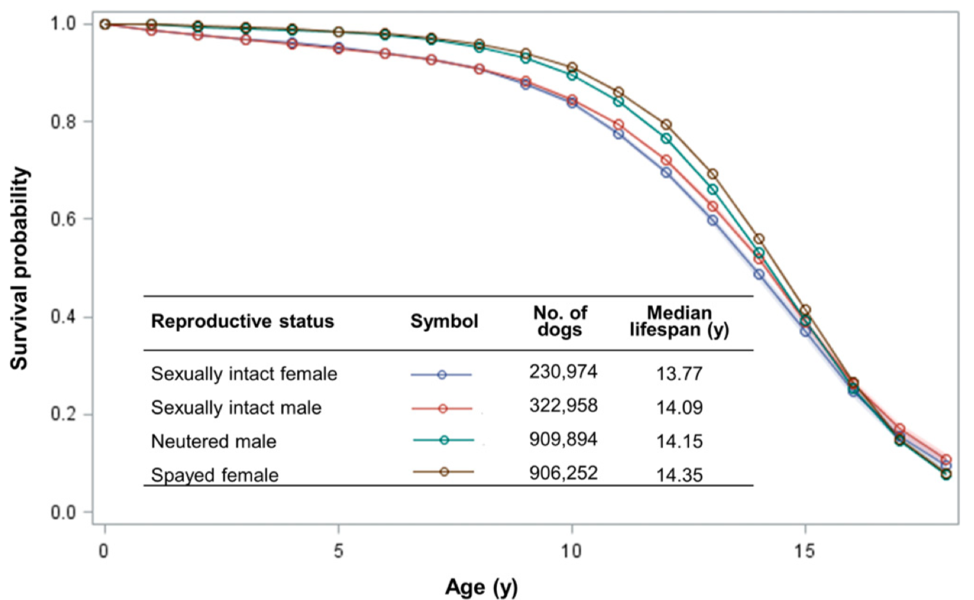
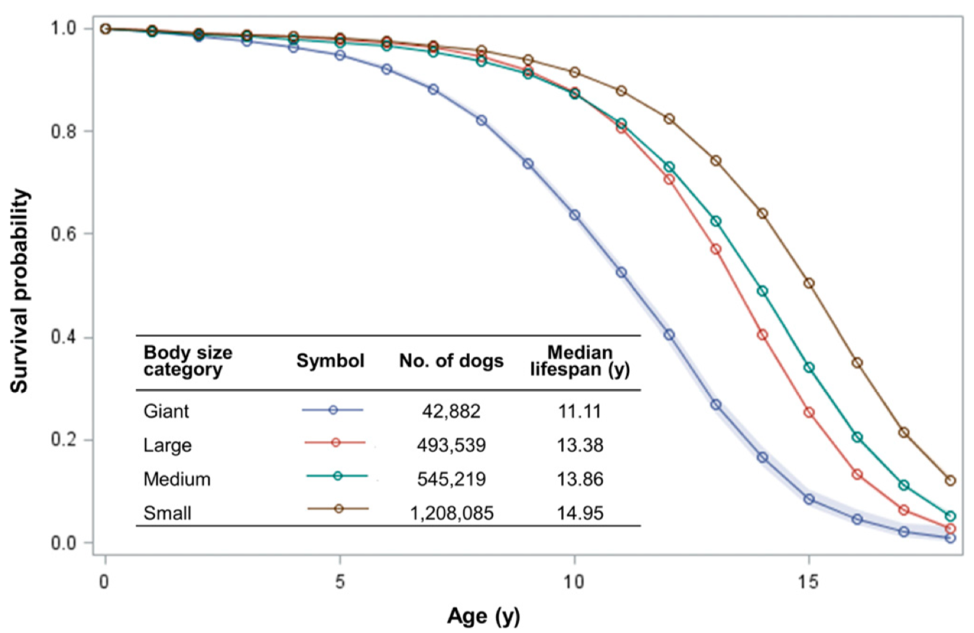
These data agree with the majority of the results of previous studies, which suggests that the relationship between neutering a longevity is real. This does not, of course, explain what this relationship is. Differences in breed, husbandry and medical care, specific causes of death, and many other factors are involved in determining lifespan. However, it is at least clear that broad claims neutering shortens lifespan are not consistent with the evidence.
This study also provides a good example of a problem common in the interpretation of scientific literature, which is the difference between statistical and real-world significance. It is possible to find differences between groups which are statistically significant, especially if you include a very large number of subjects, but these differences can be effectively meaningless in the real world. In this study, for example, the difference between the median lifespan of neutered and intact male dogs was 0.06 years (about three weeks). This is clearly not a meaningful difference in the life of an actual male dog.
The difference between spayed and intact females, in contrast, was 0.58 years (about 7 ½ months). This is a more significant difference in terms of real life, though still small as a portion of the overall lifetime of a dog.
Breed size had a much larger effect, with giant breed dogs (over 90 lbs adult weight) living almost four years less than small-breed dogs (under 20 lbs adult weight). This too is consistent with previous research though again it doesn’t explain the cause for this difference.
Bottom Line
This study strengthens the claim that neutered dogs live longer than those that are not neutered. Longevity is affected by breed, sex, care, and many other factors, and the reason for this difference is unclear. The magnitude of the difference in lifespan between intact and neutered dogs varies among studies, and the difference is not always large enough to be of any real-world significance. However, these results clearly contradict broad claims about the overall negative effect of neutering on health and longevity in dogs.
References

 0
0