Marijuana and Cannabis-Based Products for Pets: Any News?

In 2013, I wrote about a particular medical marijuana product marketed for veterinary use, Canna-pet, as an illustration of the uncertainties and issues surrounding the potential medical use of cannabis-derived products. At that time, my conclusion was that 1) there is enough pre-clinical evidence to suggest cannabinoids of various types have physiologic effects that could prove beneficial, 2) there is limited evidence for some clinical use in humans, 3) but overall the evidence in humans is weak, 4) and in veterinary species it is non-existent.

Sadly, the state of the evidence hasn’t changed in the intervening couple of years, but the marketing of such products to pet owners and veterinarians has continued to grow. The lack of meaningful regulation of dietary supplements allows the sale of unproven remedies so long as the benefits are only implied and not directly stated. This loophole has created a wonderful opportunity for companies to profit from products that might or might work and might or might not be safe.  This does not strike me as serving the best interests of patients. The money and energy put into marketing these products could be better used to fund research to identify the true risks and benefits.

The only veterinary “research” that has emerged recently is the kind that I have discussed many times before, research that is intended to sell an idea or product rather than to find out the truth about it. This is the kind of research most preferred by companies selling such products and by alternative medicine advocates such as the AHVMA, and both are involved in this particular study.

Consumers’ perceptions of hemp products for animals. JAHVMA. Spring, 2016, vol. 2

The full details of the study are not available except to subscribers, but the results are summarized on the AHVMA web site, and this summary has been widely distributed by Canna-Pet. It consistent of an online survey “provided by Canna-Pet to their customers.” Obviously, this represents clear selection bias, since those responding to the survey are going to be those buying a hemp product for use in their pets because they expect or hope it will help. Anyone who doesn’t have a pre-existing bias in favor of using such a product, or who has used it and had negative experiences, is not going to be a customer and so is not going to participate in this survey.

Of the 632 respondents, about half felt it had helped their pet with pain, sleep, anxiety, and in cats inflammation. No data are provided on the conditions for which owners felt it wasn’t helpful or any other relevant information about the animals or their conditions, other treatments, and so on.

About 15-20% of owners reported undesirable effects, such as sedation or excessive appetite.

There is no way to evaluate this survey without more information, other than to say that it appears to contain no controls whatsoever for bias. As such, it is likely to be as unreliable as most online testimonials. And it is actually a bit surprising that even with a survey that doesn’t control for bias, the best the company could say about the results was that only about half of the users of the product felt it was beneficial. Not a powerful endorsement given the exclusion of likely sources of negative feedback.

In any case, such a survey at most represents attitudes towards cannabis products and says nothing about whether or not they actually work. However, the media and advocates for veterinary use of cannabis are certainly spinning it as at least implying such products are effective or worth a try.

As I mentioned in my previous post, the good news about the diminishing stigma associated with marijuana is the possibility of real research into chemical compounds that will likely prove to have medical benefits. The bad news is that there is some evidence legalization has led to an increase in marijuana poisoning for dogs, and it has provided more opportunities for companies to get into the business of selling the potential benefits of cannabis-based products before doing the necessary work of proving these benefits exist and that they are worth the risks.

One example of this is a new company vying with Canna-Pet for this potentially lucrative market, Canna Companion. This company is a little more circumspect in their claims for the medical effects of their product, but they still aggressively promote it as a “holistic” therapy, playing on the mythology that things labeled “holistic” or “natural” can be assumed to be safe based on pre-clinical evidence or anecdote alone and don’t require the rigorous clinical testing conventional therapies are expected to undergo.

The company web site, like that of Canna-Pet, doesn’t discuss any clinical studies in companion animals since there aren’t any. They simply point to the basic science research that shows the potential for benefits from cannabis-based products. Such research often fails to live up to its promise when specific products are tested in real-world patients, but this never seems to be a concern for companies marketing untested products. The company certainly has some legitimate scientists working for them, and their Chief Clinical Epidemiologist is a well-qualified public health researcher at the NC State Veterinary College. Such an individual should be well-suited to organizing rigorous scientific evaluation of cannabis-based products. I was, therefore, quite disappointed by the very unscientific his experience and credentials are used to promote the product:

Professor Peter Cowen of North Carolina State Unversity’s College of  Veterinary Medicine and now the Company’s Chief Clinical Epidemiologist and an Advosiry Board member commented: Based on my own experience with my dog, Londun, there is something of extreme value here. I am impressed not only from a therapeutic perspective, but also from a psychological perspective.”   Professor Cowen is orchestrating a clincial study at NSCU for the coming year and the Company is  looking forward to presenting those findings to the veterinary community and the public at large.

An anecdote from an epidemiologist is worth no more than an anecdote from anyone else, and the company certainly sounds like the results of the study they are planning are a foregone conclusion. The risk of bias here is, obviously, quite high, and I wonder how eager Canna Companion will be to promote the results if they turn out not to support the product, unlikely as that is. Only time will tell.

That might also be the most appropriate conclusion to the question of whether or not cannabis-based products are useful for veterinary patients. At the moment, there is no reliable evidence, so only time will tell. Hopefully, the pursuit of profits before science won’t lead to too many animals being exposed to useless of even harmful substances before we have the data we need to know what cannabis-based products might be useful for which problems.

Posted in Herbs and Supplements | 7 Comments

Myofascial Trigger Points-Real or Imaginary?

One of the reasons I chose the acupuncture course I am currently taking is that the instructors are very clear about rejecting the Traditional Chinese Medicine mythology of Qi, Yin and Yang, and all the rest that is often used to justify or explain the potential benefits of needling. The course purports to take a purely scientific approach to understanding and using acupuncture. As I have discussed previously, however, a fair bit of traditional acupuncture practice is accepted as effective based on anecdotal experience and then rationalized post hoc with sometimes questionable anatomic or neurophysiologic explanations. One of the most intensively used of these is the myofascial trigger point concept (MTrP).

Myofascial trigger points are supposed to be focal areas of tension or contraction in muscles which are irritable and contribute to chronic refractory pain. The argument is that these develop in response to local injury, to certain postural or activity patterns, or even to diseases in internal organs or the nervous system. Practitioners who treat such trigger points claim to be able to detect them as knots or taut bands within muscles.  Such trigger points are treated primarily by “releasing” them via some kind of stimulus, such as needling, electrical stimulation, massage, laser therapy, and so on.

The concept of the MTrP is more widely accepted in the conventional medical community than acupuncture more generally, though it is primarily utilized by osteopathic physicians, chiropractors, and others who focus on physical manipulative therapies, such as massage therapists, physical therapists, etc. However, the validity of the concept and the effect of needling and other rMTrp releasing therapies is often assumed as proven in this course and then used as a explanation for some of the proposed effects of acupuncture. This is not surprising since the course director, Dr. Robinson, is an osteopath as well as a veterinarian.

There certainly is some research evidence to support the concept of MRtP and the effect of needling as a treatment. But then there is also research evidence that appears to support acupuncture, and as we have seen when looking at it carefully and critically, it doesn’t necessarily mean what advocates claim it means. (1, 2) There is clearly controversy about the MTrP concept and the effects of therapies focused on myofascial release, and it is worth bearing this in mind rather than simply accepting the idea as true and using it to then justify some claims for acupuncture.

The most recent narrative review challenging this concept was published last year, and the authors make a quite definitive claim about it:

Quintner JL, Bove GM, Cohen ML. A critical evaluation of the trigger point phenomenon. Rheumatology (Oxford). 2015 Mar;54(3):392-9.

We have critically examined the evidence for the existence of myofascial TrPs as putative pathological entities and for the vicious cycles that are said to maintain them. We find that both are inventions that have no scientific basis, whether from experimental approaches that interrogate the suspect tissue or empirical approaches that assess the outcome of treatments predicated on presumed pathology. Therefore, the theory of MPS caused by TrPs has been refuted.

Their claim rests on several grounds. The first is the problem with consistent identification of trigger points. Several studies involving experts who treat MTrP look at inter-observer reliability. These experts were asked to examine the same patients and give independent assessments of where trigger points were found. In these studies, the practitioners claimed to locate trigger points in different places and did not agree with each other to any significant extent unless they were first told what the underlying diagnosis was. This suggests that without knowing what is wrong with the patient in advance, even experts cannot reliably detect trigger points on physical exam and that they are inclined to base their subjective identification of such points primarily on what they expect to find when they already know the diagnosis, rather than on what they actually feel when doing a physical exam.

This is a pretty serious problem given that physical examination is supposed to be the main way trigger points are found. It is the same kind of problem that helped demonstrate that the Vertebral Subluxation touted by chiropractors as a major cause of illness was actually imaginary. If such inability to detect trigger points turns out to be a consistent finding, it would strongly suggest that such points don’t exist as objective entities which can be detected by physical examination, which would greatly undermine the idea that they exist at all or are a major source of clinical symptoms.

The authors also review other ways of identifying and characterizing trigger points, including biopsy findings, electromyography, and others, and they conclude that the evidence is mixed and unclear as to whether there is a single, common lesion that can be found on physical exam and associated with clinical disease.

This review also examines the evidence that needling to release trigger points is clinically effective. A number of systematic reviews and clinical trials have been done on this question, and the over conclusions are: the quality of the research evidence is mixed and often too low to be reliable; many other therapies are usually used along with trigger point needling, so it is difficult to determine which, if any, might be responsible for improvement; trigger points are identified in many very different patients with very different underlying diseases, so variation in how these patients do is high and complicates comparison of studies looking at needling for trigger point release.

Other critics of MTrP theory have made similar criticisms, including some physical medicine practitioners who have shifted from automatic acceptance of the concept to skepticism. I haven’t invested the time in examining the evidence as closely as I have looked at that concerning acupuncture, so I don’t have a strong opinion, but I do have some skepticism about the concept.

In particular, I am concerned by the inherent subjectivity in detection of trigger points and assessment of patient response to therapy. In demonstrating the location and treatment of trigger points, Dr. Robinson rests a lot of weight on interpretation of patient behaviors that could reasonably be interpreted differently. As not only a vet who has practiced for many years but someone with training in animal behavior, I know how easy it is to project our own expectations onto the behavior of other animals. If I expect to find pain in a certain spot and initially don’t, it is easy to press just a little harder until I get the reaction I expect, often without even realizing I am doing so. The lack of an objective, verifiable way of detecting trigger points and their resolution with needling is, then, a significant problem for this concept in veterinary medicine.

Given the lack of clarity on MTrP theory, it is not very helpful to use this concept as an explanation or guide for acupuncture. It simply shifts the ground from one muddy and poorly demonstrated set of ideas to another. There is no doubt, of course, that people often feel better when given various kinds of manual treatments. I suspect the same is true of many companion animals who have, after all, been intensively selected for generations to accept or even desire human contact. However, we must be cautious in projecting our expectations, beliefs, and theories onto our animal patients without robust objective evidence, since we run the risk of being fooled by the caregiver placebo effect and other phenomena that can leave us believing we have helped them when in reality we have not.

References

Here are a few of the studies discussed in the Quintner review:

Inter-observer reliability in MTrP detection:
Hsieh CY, Hong CZ, Adams AH et al. Interexaminer reliability of the palpation of trigger points in the trunk and lower limb muscles. Arch Phys Med Rehabil 2000;81: 258_64.

Lew PC, Lewis J, Story I. Inter-therapist reliability in locating latent myofascial trigger points using palpation. Man Ther 1997;2:87_90.

Myburgh C, Larsen AH, Hartvigsen J. A systematic, critical review of manual palpation for identifying myofascial trigger points: evidence and clinical significance. Arch Phys Med Rehabil 2008;89:1169_76.

Wolfe F, Simons DG, Fricton J et al. The fibromyalgia and myofascial pain syndromes: a preliminary study of tender points and trigger points in persons with fibromyalgia, myofascial pain syndrome and no disease. J Rheumatol 1992;19:944_51.

Clinical effect of needling trigger points:
Annaswamy TM, De Luigi AJ, O’Neill BJ et al. Emerging concepts in the treatment of myofascial pain: a review of medications, modalities, and needle-based interventions.PM R 2011;3:940_61.

Cummings TM, White AR. Needling therapies in the management of myofascial trigger point pain: a systematic review. Arch Phys Med Rehabil 2001;82:986_92.

Ho KY, Tan KH. Botulinum toxin A for myofascial trigger point injection: a qualitative systematic review. Eur J Pain 2007;11:519_27.

Rickards LD. The effectiveness of non-invasive treatments for active myofascial trigger point pain: a systematic review of the literature. Int J Osteopathic Med 2006;9: 120_36.

Tough EA, White AR, Cummings TM et al. Acupuncture and dry needling in the management of myofascial trigger point pain: a systematic review and metaanalysis of randomised controlled trials. Eur J Pain 2009; 13:3_10.


Posted in General | 2 Comments

Is Evidence-based Medicine a Dead End?

A recent blog post promoted by the American Holistic Veterinary Medical Association (AHVMA) asks the question, “Is Evidence-based Medicine at a Dead End?” Since scientific evidence often fails to support the beliefs and claims of alternative vets, and the AHVMA has demonstrated many times that it accepts only evidence that supports the approaches it promotes, it is no surprise that the article contains a variety of tired misconceptions about EBVM and unproven assumptions about CAM that lead to the inevitable conclusion the author wanted to arrive at.

The first step is to suggest that EBM has somehow diverged from the presumably pure state in which it originated under the impetus of the “founding father” of EBM, Dr. David Sackett:

Evidence-Based Medicine (EBM) as practiced today (and not as originally conceived by Sackett), emphasizes fact-based medicine.

I suspect Dr. Sackett would be surprised to hear that emphasizing facts over beliefs and opinions is somehow a departure from his vision for EBM. The very fact that this can be used as a criticism of EBM highlights the disdain CAM practitioners and the AHVMA have for those pesky facts, and their preference for belief and pure faith-based medicine.

Large numbers of responses are analyzed, so this is valid for populations as a whole. In veterinary medicine this is called herd medicine, and decisions are made that will best protect the whole herd.

This is intended to build up to the claim CAM practitioners often make that because scientific research involves studying groups the results aren’t applicable to individuals, who are all unique. This is a common fallacy I’ve covered before, and which involves both the Vegas Delusion and the Snowflake Fallacy.

The Vegas Delusion is the idea that because statistics apply to groups and the outcome of any even for an individual is not perfectly predictable, we can ignore statistics in making decisions. The name for this fallacy comes from the fact that gamblers often use it to justify their hopes of winning despite the odds being overwhelming that they will lose. It is true that some individuals win at games of chance, and sometimes they win big. But casinos are lucrative businesses and gambling is a problem that ruins lives because the statistics do predict what will happen to most people most of the time.

Similarly, in medicine the prognosis or response to treatment can’t be perfectly predicted for any individual patient. But the averages that affects groups are often a useful and realistic guide to what will probably happen, and ignoring these to make up treatments haphazardly for each individual patient is a dangerous and unreliable way to practice medicine.

The Snowflake Fallacy refers to the belief that because every individual is unique, we cannot use information about a group of patients to guide the treatment of any particular patient. While it is true that we are all unique in many ways, we are also very much alike in many ways. And often the differences that we notice immediately, in appearance or behavior, aren’t relevant to how we respond to medical treatment. The significance of such differences has to be demonstrated with good research, not simply assumed or made up.

There is also a lie inherent in the claim that CAM individualizes treatment more than conventional medicine because it doesn’t rely on controlled scientific research. CAM practitioners do use information about groups of patients to guide their treatment of each individual, they simply use the haphazard and uncontrolled personal observations of their patients and of other CAM practitioners instead of scientific research. A homeopath who chooses an “individualized” remedy from a repertory is doing so based on patterns of symptoms and responses to treatment observed in other patients by other doctors. This is applying group results to individuals, it is just doing so without any effort to control for bias, placebo effects, and other important sources of error.

The author then goes on to point out that it is often difficult to control for placebo effects when testing non-pharmacologic therapies, such as acupuncture. Because of this, she believes EBM automatically finds fault with research in such therapies and so denies their obvious benefits unfairly.

While it is true that it is challenging to control for placebo effects in such approaches, it often can be done. In the case of acupuncture, needling at locations not considered to be “real” acupuncture points, or not needling at all but simply convincing the patient you have, often has just as much a clinical effect as verum acupuncture (1, 2). This most likely means that the “real” acupuncture is only an elaborate placebo, but acupuncturists are unwilling to accept this conclusion, choosing instead to claim that the method of testing doesn’t work. They have no alternative to propose, and simply expect such therapies to be accepted as effective on the basis of clinical experience alone. This is clearly a self-serving approach and not an example of a fatal flaw in evidence-based medicine.

This vet then goes on to argue that because scientific research studies try to minimize variables and simplify circumstances to make results easier to evaluate, that science ignores complexity and can only be useful in evaluating and treating very simple problems with single causes. Again, there is some truth to the notion that one will almost never find a real-world situation as clear and simple as even the most complex research study, so there are things such studies can’t tell us about phenomena in the real world. But the issue isn’t whether scientific evidence is perfect, it is whether it is more reliable than the alternatives.

The alternative proposed to scientific research is simply trial-and-error experience with individual patients. The CAM alternative to clinical research is simply to try and identify patterns in anecdotal experiences and our own clinical practice and rely on those. This is what human beings did for all of history until the scientific method was developed. In was a spectacular failure in comparison to what we have achieved using science.

Haphazard uncontrolled observation never doubled average life expectancy, dramatically reduced infant and maternal mortality, eliminated entire diseases, or accomplished anything like the amazing improvements in health and well-being in thousands of years that we have achieved in a mere couple of centuries. People like this author are not suggesting a new alternative or improvement in understanding disease diagnosis and treatment. They are proposing we return to the folk medicine methods that served us so poorly for so long.

Constructive criticism and improvement to scientific methods, including evidence-based medicine, is essential, and no one challenges concepts or practices in science more vigorously than scientists. But identifying, exaggerating, and fabricating weaknesses in EBM and then proposing we return to the even more limited and unreliable methods of history is not in the best interests of patients, human or veterinary.


Posted in General | Leave a comment

Evidence Update: Dodds Study on Vaccine Dose in Small Breed Dogs

I have been able to get a look at the published paper for the study I recently discussed by Dr. Jean Dodds investigating  giving lower doses of vaccine to small breed dogs. There is nothing in the published report that changes my earlier conclusion. This study adds nothing of substance to our understanding of optimal vaccination practices. In design and execution, it is simply a marketing tool to promote a set of pre-existing beliefs about vaccination, and in itself does not help to clarify what optimal vaccination practices might be.

The argument Dr. Dodds seems to be making contains a number of elements I agree with and believe to be supported by good science:

  1. The effectiveness and duration of immunity vary by vaccine type and with many other factors, but in general core canine vaccines are very effective at preventing illness and likely most pets who receive the initial vaccine series at the appropriate time are well-protected for at least 3 years and probably much longer.
  2. Vaccines can have adverse effects, and while these are rare they can be potentially serious. The precise factors that make some individuals more susceptible to such reactions than others are unclear, but size appears to be a factor, with small-breed dogs reporting more reactions that larger breeds. (this is quite a bit more restrained than previous statements she has made about “vaccinosis” in small animals)
  3. Avoiding unnecessary vaccination in animals already immune to particular infectious diseases is a desirable goal.
  4. Titers can often tell us if an animal is already immune, depending on the disease in question, though they generally cannot tell us if the animal is vulnerable to a disease since they only reflect part of the overall immune response.

She adds to these a number of claims which are not supported by good evidence, including most of the claims related to this specific study.

The dose of canine distemper virus (CDV) and canine parvovirus vaccine (CPV) vaccines can be reduced to 50%, but not more, for small breed and small mixed breed type dogs, based on body weight, and still convey full duration of immunity.

She states this in the introduction, indicating it is a pre-existing belief she intends to buttress with this study. However, her citations for this very clear and specific claim include three of her other papers expressing this opinion and an editorial from 1999 discussing concerns among practitioners about vaccination practices. No specific research is cited that supports this claim. And elsewhere in the paper, she makes it clear that the claim is actually based primarily on her personal experience, aka anecdotal evidence.

In the informed consent sheet for clients, she says “Clinical experience has shown…” and “One of the principal investigators has nearly five decades of clinical and research experience with vaccinations in companion animals. This experience has shown…” and then repeats this claim. It is not a claim supported by research evidence but simply something she has come to believe based on patients she has seen, and it should be clearly presented as such, as mere opinion appropriate for generating a hypothesis but not for making confident claims.

The only relevant research she cites is one study in which children were shown to have an adequate protective response to a lower quantity of Hepatitis B vaccine. This was tested primarily to reduce the cost of vaccination and make vaccination available to more people, not to avoid adverse effects. But in any case, it doesn’t validate the general concept that vaccines should be dosed by body weight, which is not accepted vaccine science in human or veterinary medicine.

As for the study itself, it suffers from many serious flaws that likely would have prevented publication in an ordinary veterinary journal, which may be part of why it appears in the journal of the AHVMA.

The first issue is selection bias. The subjects were recruited by an announcement on Dr. Dodds’ web page and emails to “holistic veterinarians.” This does not appear to have been very successful since only 13 animals were recruited. But in any case, these likely represent an unusual patient population, since “holistic” veterinarians, and of course Dr. Dodds, recommend quite different approaches to preventative and therapeutic healthcare than most vets, including different vaccination practices. These animals may not be sufficiently similar to pets that receive standard veterinary care, including with respect to their vaccine history. This would limit the ability to generalize any results to other populations.

Another problem was the lack of any standard definition for “a half dose of vaccine,” which is what participating vets were told to give. While all used the same specific vaccine, this vague description of the main intervention being tested allows for a lot of unpredictable variation from subject to subject, and makes it hard to compare with any other research that may be done. The specific antigenic load given would be much more useful information at this stage of research.

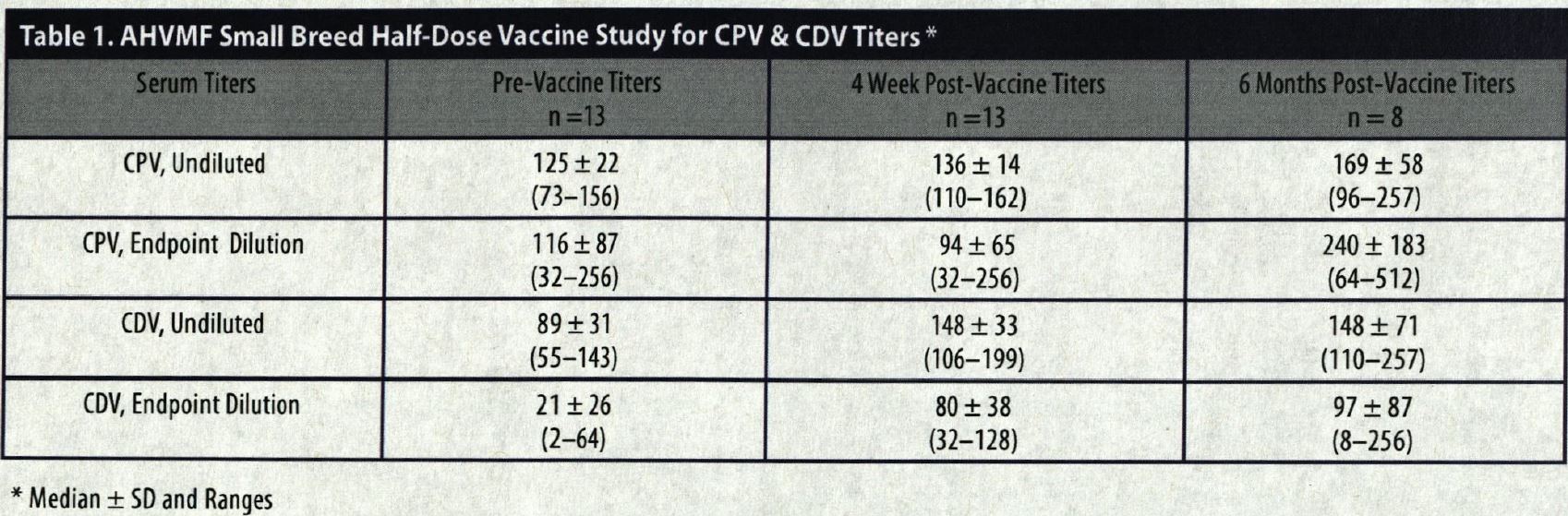
A core problem with the study is that it did not address any of the underlying issues of whether giving a half dose of vaccine would protect dogs as well from disease or reduce the number of adverse vaccine reactions. Neither of these subjects was evaluated in any of the study dogs. All that was done was that antibody levels were measured before vaccination and at 4 and 6 months later. Here are the main results:

DODDS - J Am Hol Vet Med Assoc  table 1

All dogs had titers considered indication of immunity before being vaccinated. Most, but not all, dogs had an increase in their titer after vaccination at 4 months (9/13 for CPV and 11/13 for CDV) and 6 months (6/8 for CPV and 3/8 for CDV). This tells us, at most, that a smaller amount of a vaccine than usually given promotes some increase in antibody levels for CPV and CDV for some dogs. This, unfortunately, tells nothing about how to best vaccinate dogs to protect them from these diseases while minimizing any adverse health effects.

(The difference in the number of samples at 4 and 6 months reflected that while all dogs had blood samples taken at both times, “5 dogs had samples drawn at 6 months but these were inadvertently discarded.” Accidentally throwing out nearly ¼ of your samples is a pretty serious error in any study, and raises questions about the validity of the data as well as the conclusions.)

These data, even if accepted as legitimate, do not answer any of the pertinent questions, such as whether dogs receiving half of the usual vaccine dose would be protected as well long-term or healthier and less likely to experience health problems than dogs receiving the usual vaccine dose. The study doesn’t, in other words, provide any real evidence to support or refute the claims Dr. Dodds and many other “holistic” vets make about the best vaccination practices. And given she has admitted that she had no intention of following these dogs further or conducting any larger trials based on this “pilot” study, it is pretty clear that the only purpose of this study was to generate ammunition for a marketing campaign to promote ideas about vaccination that Dr. Dodds has developed entirely based on personal experience and belief.

I have addressed both the evidence concerning risks and benefits of vaccination and the issue of using titers to help make vaccination decisions. Limitations in the available evidence make a variety of different practices equally justifiable. While I probably vaccinate less than many conventional vets, I refrain from making definitive statements beyond the evidence about the effects of various approaches to vaccination. Dr. Dodds’ position is somewhat intermediate between the rabidly anti-vaccine views of some holistic vets and the unthinking annual vaccination too often still recommended by many conventional vets, and she and I are probably not too far apart in principle. However, she chooses to emphasize the risks of vaccination (especially in places where, unlike this article, she talks about nonsense like “vaccinosis”), and she makes confident claims about the best vaccination approach that she presents as science-based but which really are simply her opinion.

In this study, she has provided the illusion of scientific evidence to support these claims, but the reality is that this study is too flawed in design and execution to add anything useful to the question. Unfortunately, Dr. Dodds and others are already promoting it widely as evidence that their preferred vaccination approaches are better for patients than those of others, including the current most evidence-based guidelines. This is a misleading misuse of science consistent, unfortunately, with her approach in many other areas.

Posted in Vaccines | 26 Comments

“Traditional Chinese” Emergency and Critical Care Medicine?

I ran across this article recently with a board-certified specialist in veterinary emergency medicine recommending so-called Traditional Chinese Veterinary Medicine (TCVM) for critically ill patients.

As I’ve discussed in detail, there is some very limited evidence for a few potentially useful effects from passing electricity through acupuncture needles. However, the bulk of TCVM practice, and all of the theories behind it, is pure folk mythology and pseudoscience. It is always amazing and disappointing to see someone with an advanced scientific education treating such beliefs systems, and the therapies associated with them, as if they were in any way equivalent to science-based medicine or legitimate to experiment with on our sickest patients without good research evidence to support the claims made for them.

Such individuals would never tolerate the same near complete absence of evidence for a conventional drug or therapy. They are willing to give untested chemicals (herbs) and needle patients based solely on individual clinical experience and the belief that these practices have been used historically with success (which is often untrue).

Ultimately, it comes down to believing that a therapy is helpful based on individual clinical experience not only in the absence of high-quality evidence but in the absence of any controlled evidence or even a plausible theory. The history of medicine is one long lesson in why uncontrolled clinical observation is a very, very poor second to scientific research in evaluating the efficacy of our therapies. From bloodletting to internal mammary artery ligation, from Lourdes water to antibiotics for cats with interstitial cystitis, every ineffective therapy ever tried has appeared to work sometimes based on trial-and-error use. Either every possible treatment works for some patients, or clinical observation is an unreliable way to validate our treatments. Personally, I think the case is much stronger for the latter conclusion than the former.

I also think it is more than a question of whether or not we have clinical trial evidence. Of course we lack that for many of our treatments. But even therapies based on sound basic physiology and pre-clinical in vitro and animal model testing fail most of the time when subjected to clinical studies. Isn’t even less likely that a therapy based on Tonifying Yang or Releasing Wind is going to be truly effective? The rationale matters, especially in the absence of good controlled evidence.

Of course, in challenging these beliefs, I am immediately subjected to accusations that I am “closed-minded.” An open mind means not judging automatically and without regard to evidence, but it doesn’t mean not judging. We all have to make judgments about the safety and efficacy of the therapies we use. There is nothing inherently better or fairer about a positive judgment. If someone chooses to believe TCVM or bloodletting, or any other unscientific approach works based on the weak evidence on uncontrolled personal observation, they are not being more fair or open-minded than a critic who asks for better evidence than this before accepting such therapies. They are simply applying a different, looser standard of evidence.

I don’t claim with certainty that these therapies do not work, only that their theoretical foundations are unscientific, which makes the prior probability of their working very low, and that there is no good reason to believe they work in the absence of good-quality evidence to raise this probability. This is not being closed-minded, merely applying the principles of science and evidence-based medicine, which it seems to me have proven their worth quite dramatically compared with history, tradition, and anecdotes.

While this vet is usually careful to recommend these treatments with conventional care or instead of it only if the owner declines conventional treatment, I still can’t help feel it is unethical for a specialist to promote and legitimize such pseudoscience. We are essentially experimenting on sick patients without acknowledging this and claiming to have effective treatments when they are both implausible and not properly tested. We are giving a special pass to something to avoid the usual scientific testing we require of all our other therapies only because someone has slapped the label “alternative” on it.
Here are some examples of the comments in the article that I find disturbing:

If you have a patient that is bleeding post-operatively (post-op spay) or an unstable hemoabdomen that needs to go to the operating room, you can try dry needling Tian-Ping.

One indication for acupuncture could be in a post-op soft palate resection in a brachycephalic dog. By injecting B-12 at An-Shen to help calm a patient instead of writing an order for Acepromazine PRN

there are six typical Traditional Chinese Veterinary Medicine (TCVM) patterns for heart failure….If an owner is unwilling to do MV and the pet has collapse of Yang Qi, points for shock can be used as well.

If you have a feline patient with megacolon, and the owner is unwilling ? or it is too risky ? to place a pet under anesthesia for a de-obstipation, then enemas, lactulose, intravenous fluids and acupuncture can be used. There are 2 typical patterns for the Eastern diagnosis of megacolon, it is either Qi deficiency, or Yin and Blood deficiency. The acupuncture points would be selected based on what pattern they were exhibiting.

We treat many primary IMHAs and when they respond quickly it is great, but often we have patients that do not respond to the typical immunosuppressives. The traditional Chinese medicine pattern would need to be identified since there are different patterns. Typically for an extravascular hemolysis case, the main issues tend to be spleen Qi deficiency/blood deficiency. So selecting acupuncture points that would tonify the Qi/Blood, support the spleen, and immunomodulating points such as (LI-4, LI-10, LI-14, ST-36, GV-14) would be best. If the patient has evidence of intravascular hemolysis, clearing the heat and damp would be important and thus direct your acupuncture approach. The use of herbal therapy is becoming more popular and for a non-responding, primary ITP case Gui Pi Tang may be helpful.

the cat that is having an acute asthma attack that is not responding to typical interventions such as oxygen, steroids, and bronchodilators. Knowing LI-20, Bi-tong and Lung-hui acupuncture points can come in very handy. There are really countless uses for dry needling, aqua and electrical acupuncture in the CCU and it will likely become a more routine treatment in the critical care veterinary setting.

Posted in General | 19 Comments

Alternative Standards for Alternative Continuing Education Courses

I have written several times about the efforts of alternative vets to circumvent the systems intended to ensure quality and scientific legitimacy in continuing education for veterinarians. In brief, most states require vets to regularly take a certain number of hours of continuing education. The idea is that scientific and medical knowledge grows and changes over time. Since states give vets an exclusive monopoly on practicing veterinary medicine, they want to ensure the public is protected against veterinarians who have outdated or inaccurate knowledge and skills.

Such requirements are meaningless if there is no control over the kinds of education vets can use for this license requirement. If I can take a class in origami or a Renaissance poetry, that’s great fun but it doesn’t help ensure I am an up-to-date and competent vet. So most states require continuing education (or CE) courses be accredited to be used for licensure. Vets can still take any courses they want in any subject, they just can’t get credit for them for licensing purposes unless they are accredited.

The American Association of Veterinary State Boards (AAVSB) is the main organization recognized as accrediting CE courses, through its RACE group. Appropriately, RACE requires the content of CE courses have some minimal scientific evidence or compatibility with science.

[Courses must] build upon or refresh the participant in the standards for practice and the foundational, evidence-based material presented in accredited colleges or schools of veterinary medicine or accredited veterinary technician programs…CE programs that advocate unscientific modalities of diagnosis or therapy are not eligible for RACE approval…All scientific information referred to, reported or used in RACE Program Applications in support or justification of an animal-care recommendation must conform to the medically accepted and scientifically supported standards of experimental design, data collection and analysis.

This category includes all conventional medical and surgical sub-categories that are evidence based… Based on scientific principles, there must be an established “probability” of success that conforms to the medically accepted and scientifically supported standards of experimental design, data collection and analysis.

  1. Content of a Category One: Scientific Program must be supported by:
  2. Availability of beneficial evidence (peer reviewed journal) OR
  3. Three peer reviewed studies OR

iii. Study review – Case control studies leading to the benefit of the patient OR

  1. Evidence based studies OR
  2. Proven usefulness /effectiveness OR
  3. Evidence of rigorous scientific research OR

vii. FDA (animal approved) objective information/about the product (safety) plus one of the categories above.

RACE does approve some CE offerings involving alternative therapies, but many do not qualify for accreditation due to lack of compliance with RACE requirements for scientific validity. Organizations of alternative medicine providers have often responded to the denial of RACE approval not by producing better scientific support for the disputed content but by circumventing the approval process. The American Holistic Veterinary Medical Association (AHV MA) and other groups have advocated bypassing RACE and getting CE approval directly through the states. Smaller numbers of individuals are better able to influence the political process at the state level, so this has often been a successful strategy.

Also, since the AHVMA has now qualified for a seat in the AVMA House of Delegates, some states automatically accept their content as legitimate CE regardless of scientific validity or RACE approval. House of Delegate membership essentially only requires only a certain number of members who also belong to the AVMA, so it is not a mark of any kind of legitimacy to the mission of the organization. However, it is a useful component to an overall campaign to market alternative medicine, and in this case it facilitates bypassing the usual standards veterinary CE courses must meet.

The Academy of Veterinary Homeopathy (AVH) actually sued AAVSB over denial of RACE approval, unsuccessfully. (1,2)

But the CAVM community has gone even further, creating an alternative CE accreditation board specifically to approve alternative medicine content, RAIVE. As they state on their web site:

The CAVM community now relies on RAIVE to validate their educational meetings. We urge all state boards to do the same for CAVM courses. The opinion of the RACE committee is no longer valid.

Failing to approve every element of their CE offerings, regardless of scientific validity, apparently invalidates the entire CE approval process. The AHVM, RAIVE and other CAVM organizations are now attempting to get state veterinary medical boards to accept RAIVE accreditation as comparable to RACE approval. Washington state, for example, is currently accepting input on a proposal to do just this (The proposal)

The RAIVE web site argues there is no need to demonstrate scientific validity for CE offerings, only that CAVM should be taught by “experts” in that field. As I have pointed out before, that by definition requires that any judgment of CAVM be made by individuals who already believe in its safety and efficacy and have committed themselves to practicing and teaching specific modalities. This effectively eliminates any possibility for falsifying or even significantly challenging these methods, and makes the standard of validity not scientific evidence but expert opinion. It is the perfect closed shop.

The site further specifically states that scientific evidence is a secondary consideration and need only be developed if the methods they advocate are already accepted and taught:

RAIVE recognizes that evidence based medicine does not define the practice of veterinary medicine, but is a process of clinical decision-making, and veterinarians can also benefit from education in emerging subjects with little scientific support. In these cases, RAIVE approved CE must incorporate experts with advanced training or deep clinical experience in these subjects.

RAIVE recognizes that not all CAVM modalities meet the currently accepted standards of evidence. However, RAIVE also recognizes that in order for the evidence to be produced, CE in these modalities must be encouraged in order to develop and strengthen skills in practitioners of these modalities.

So we should teach people to use these methods first, and then maybe test them scientifically later? This effort to avoid the usual standards of evidence that conventional veterinary CE offerings are expected to meet, and to specifically reject scientific testing as the primary standard in favor of individual expertise, reflects the common view often manifest in the CAVM community that science is useful only for proving what one already “knows” from personal experience or for convincing others of the validity of such knowledge. The issue is not whether CAVM methods are or can be scientifically validated. Some practices might meet this standards, and others clearly do not. As I’ve said repeatedly, many aspects of CAVM can and should be investigated scientifically. But others, like Chinese Medicine and Reiki, cannot be because they are belief systems not scientific hypotheses. Others, like homeopathy, have already been evaluated and proven not to work. And CAVM proponents themselves often claim scientific evaluation is unnecessary or inappropriate for their methods. Is it really appropriate for a vet to maintain their license, their legal monopoly to practice veterinary medicine, by study things that are inherently unfalsifiable or incompatible with science or that have already been proven false?

The core issue is that the ethos of the CAVM community views scientific evidence as, at most, a nice extra to add on after one has already figured things out by trial and error and, at worst, completely irrelevant to the evaluation of the treatments we use on our patients. This is not just a disagreement about the evidence for specific practices, but an attempt to fundamentally alter the epistemological foundations of veterinary medicine.


Posted in General | 4 Comments

SH#$ Homeopaths Say

I have provided many examples over the years of the ridiculous and dangerous things veterinarians practicing homeopathy say. The fact that such individuals are allowed to practice this form of witchcraft as if it were a legitimate medical approach, and that they are protected under the legal monopoly licensed veterinarians have to practice veterinary medicine, is an embarrassment to the profession and a disservice to animal owners.

I recently ran across yet another example of the amazing ability of homeopathic vets to blame anything they don’t understand on vaccines or conventional veterinary medicine without the slightest supporting evidence or even plausible logic. Courtesy of Dr. Michael Dym:

Just to explain to animal guardians the difference from a holistic/homeopathic perspective on chronic vaccinosis, vs a more conventional perspective, where such information is not taught, and where reactions are only seen as occurring rarely within minutes or hours of a vaccination.

The “information that is not taught” is, of course, the completely unproven and unlikely information homeopaths believe about vaccines. There is no reason, or even excuse, for teaching such nonsense to veterinary students.

A 16.5 year old presented today after a sudden onset of what sounded like what is known as a neuroembolic event; the kitty presented with a sudden onset of hind leg stiffness/weakness, with staring behind him like something was there that was not. The kitty has been diabetic for many years. Most recent vet exam was back in first week of December 2015 where guardian had been concerned about odor coming from the cat’s mouth. He had not been to vet in a few years prior to that visit. That day, the kitty was given a rabies vaccination, and had its teeth cleaned on the same day. On careful review of the notes, it was noted that the kitty had an unsteady weakness and wobbliness for 3 days after the December visit, prompting a phone call of concern by the guardian, before “supposedly” normalizing back to prior status. However today’s sudden embolic, unexplained event, would be potentially seen as a chronic complication from the rabies vaccination from the prior visit in December.

“Would be potentially seen” actually means “homeopaths believe vaccines are responsible for any bad thing they don’t understand.” There is no evidence or sound pathophysiologic reasoning connecting these symptoms to the vaccine that was given. There are many potential explanations, and without detailed information and a good physical examination, I can’t diagnose the patient (unlike Dr. Dym, who apparently requires neither). However, blaming them on the rabies vaccination is not more reasonable than blaming them on the position of the planets at the time of the animal’s birth. Both explanations are purely arbitrary and faith-based.

These clinical situations, which typically go under the radar when assessing chronic immune or neurological effects from a conventional perspective, are far more common than is typical recognized by the conventional veterinary community, however, there is enough clinical evidence and even studies that do show the potential chronic effects on the brain and nervous system in pets vaccinated, especially with rabies, and when in a a [sic] geriatric or immune compromised state.

No such evidence exists, apart from “case reports” such as this by homeopaths making stuff up. Chronic medical problems associated with vaccination such as Dr. Dym describes could possibly occur, but these haven’t been detected or proven, simply assumed to happen because they fit the anti-science belief system of homeopathy.

Many disease conditions are considered miasmatic in animals. Niasms [sic] refer to inherent defects or inherent tendencies towards disease which can be genetically endowed. These underlying predispositions towards disease are often expressed after excessive vaccination or suppressive long term allopathic treatment. Our pets are clearly abused by allopathic overtreatment, with antibiotics corticDsteroiUs, and hormones. Vaccinations are given much Coo [sic] frequently, in excessive combination with one another. and without regard to need or potential exposure of the animal to these disease agents.

A fascinating combination of mischaracterization and outright falsehoods about conventional medicine with imaginary explanations for disease that come straight out of the 18th century. Homeopaths are perversely proud of having learned nothing about biology or the basis of health and disease since their founding father established the discipline over 150 years ago. And while they object strongly to any criticism of their methods, they feel perfectly comfortable announcing that pets are “clearly abused” by scientific medicine. ….vaccination can result in certain sensitive in­dividuals a chronic disease state one that is long-lasting, indeed in some cases a life-long condition. In human children there is increasing evidence of linkage between vac­cination and chronic illnesses such as autism, juvenile diabetes, and asthma.

Actually, there is increasing evidence, consistent across many years and millions of children, that these are not caused by vaccination. These false and dangerous belief actually injure and kill children when their parents are inappropriately frightened into avoiding appropriate vaccination.

This state of “vaccinosis” is under­stood as the disturbance of the life force that results in mental, emotional and physical changes induced by the laboratory modification of a viral disease to make a vaccina­tion. In other words, instead of seeing acute expressions of viral disease, we are, instead seeing symptoms of chronic ill­ness which are actually documented to occur in rabid animals. Symptoms of rabies includes Restlessness; viciousness; avoid­ance of company; unusual affection; desire to travel; inability to be restrained; self biting; strange cries and course howls; inability to swallow resulting in gagging whom eating/drinking; staring eyes; swallows wood ,stones, in-edibles; destruction of blankets, clothing; convulsive seizures; throat spasms; increased sexual desires; disturbed heart function; excited and jerky breathing. My biggest con­cern with pets are the changes in behavior after being vaccinated. This is usually along the limes of aggression, ‘`suspicion, unusual fears, etc.

The key words here are “life force.” Homeopathy is effectively a religion, not a system of medicine, and it relies on unprovable assumptions about the spiritual world to explain disease and how homeopathy is supposed to work.

It also relies on a simplistic idea about cause and effect that is often referred to as “sympathetic magic.” Superficial resemblances are assumed, without evidence, to represent deep functional connections.  Any symptoms that one could conceivably associate with rabies and that occur in any animal ever vaccinated for rabies are attributed to the vaccine.

However, even this slim thread of logic is abandoned in order to blame virtually any abnormality or problem on vaccination.

The essential aspect [of vaccinosis] is a lack of control of impulses. Many pets may exhibit any or many of the above behaviors indefinitely such as “reverse sneezing” and increased mounting seen in neutered pets. Conventional medicine does not explain these odd symptoms, but homeopathically these pets may be exhibiting symptoms of rabies vaccinosis and occur fairly commonly in my opinion.

There is no evidence or plausible rationale connecting “reverse sneezing” or mounting behavior with rabies vaccination, we are simply expected to take homeopaths’ word for the relationship and distrust a vaccine which has saved literally millions of human and animal lives.

It is a sad comment on how veterinary medicine is regulated that such nonsense is permissible under color of practicing veterinary medicine. And it is a sad comment on our profession that so few veterinarians are willing to openly challenge such baseless claims and fear mongering and acknowledge the overwhelming evidence that homeopathy is a worthless superstition, not a legitimate healthcare practice.

Posted in Homeopathy | 9 Comments

Skeptvet’s Acupuncture Adventure- Part 7: Emerging Themes

I haven’t updated my acupuncture adventure in a while, largely because I’m past the part of the course making general claims and justifications of acupuncture and into the portion that consists mostly of memorizing individual points and associated anatomical and functional elements. The details don’t matter a great deal if the general principles and the evidence related to them don’t hold up, and I remain unconvinced on that count. I appreciate the absence of mystical explanations concerning energy fields and extensive empty metaphors about Heat, Wind, Yin/Yang, and so on. However, the themes that are emerging in place of these concepts still seem quite problematic. I thought I would summarize some of the major principles being expounded in this course, and my concerns about them.

  1. Evidence of anatomical connection is taken as evidence of functional connection.

The instructors seem to feel that if any sort of physical connection can be traced between an acupuncture point and some other part of the body, it is fair to assume that stimulation at that point should influence that part. For example, if a point on a limb has sympathetic innervation that can be traced back to sympathetic nervous system (SNS) centers in the brain, it is assumed stimulation of that point can influence SNS.

There are several problems with this assumption. To begin with, as I discussed earlier, one can stick a needle almost anywhere on the body and find a nerve, muscle, blood vessel, or some other organ that it is claimed responds to needle stimulation. There is little evidence to suggest the particular points identified in traditional acupuncture, and still used in supposedly scientific acupuncture, are anatomically or functionally special. The assumption that they are underlies all the use of these, but the case for that assumption is weak and contradicted by abundant research showing that needling location makes little if any difference in the response to needling.

The other problem with the idea that because one can trace a nerve or blood vessel at one location back to other parts of the nervous or circulatory system one can manipulate the distant structures by needling this point is similar. In the body, everything is connected to everything else. There is almost no part of the body that can’t be connected in some way to any other part. Without showing that particular points used to cause specific effects, such as modulation of the SNS, have unique or specific connections that should cause those effects which other points don’t have, you are just arbitrarily identifying some locations as more special or connected than others in a way that isn’t evidence-based.

2. Any stimulus provided is assumed to result in the desired effect.

There seems to be another unproven assumption that when one stimulates a point believed to have special influence over some body organ or system that the stimulation will result only in the desired effect. Again as an example, if you needle a point that influences the SNS, it is assumed the influence will be what you want for the patient, increasing or decreasing SNS activity as desired. The main evidence for this seems to be the historical use of particular points for particular purposes. But if you can stimulate the SNS by needling a given muscle point, why isn’t it just as likely to cause undesired change? If point X downregulates SNS and point Y upregulates the parasympathetic nervous system (PNS), why couldn’t it be the other way around?

While the instructors acknowledge that acupuncture can have negative effects, these are mostly described as errors in needling, such as puncturing blood vessels, internal organs, or other structures one does not intend to puncture. It is also acknowledged that the needling itself can be painful. But the idea that correctly stimulating a particular point could have effects other than those desired has not, so far, been mentioned. This implies only beneficial effects with no side effects, which violates McKenzie’s Law.

3. Myofascial trigger point theory.

Dr. Robinson is an osteopath as well as a veterinarian, and a common element of osteopathic training is myofascial trigger point theory. This is the theory that pain and dysfunction, both locally and at distant parts of the body, can be caused by “knots” or “taut bands” of tension in muscles, which one can relieve by manipulation of these trigger points with massage, laser therapy, and needling. Dr. Robinson seems to suggest in her course that perhaps the most important way to identify which acupuncture points to treat in a given patient is to look for these trigger points and focus on relieving them locally, as well as treating the patient’s problem through other effects of acupuncture at points elsewhere on the body.

The problem is that trigger point theory is itself not much better supported by scientific evidence than acupuncture. It is widely believed and utilized among osteopaths, massage therapists, chiropractors, physical therapists, and others in both conventional and alternative medicine who treat musculoskeletal problems, but there is plenty of controversy and not a robust body of evidence to show the theory is correct or the effects of manipulative treatments occur through trigger point release. So it isn’t helpful to explain the unproven benefits of acupuncture using a similarly unproven, though somewhat more widely accepted, theory.

4. Vague terms with little specific evidence for their meaning

There is a lot of use of scientific and general terminology in ways that are not always defined very specifically and which seems to cover up the lack of evidence for implied clinical effects. For example, many purported effects of acupuncture are explained in terms of “neuromodulation.” I discussed this briefly earlier in the course, and the explanation or evidence presented for this concept hasn’t gotten a lot more detailed. Again, the assumption seems to be that if a point is connected to part of the nervous system then stimulation of that point will have desirable effects on that part of the nervous system. Calling this “neuromodulation” doesn’t explain or prove it to be true.

Similar problems pertain to other terms like “stimulating,” “releasing,” and so on. These may be descriptions of real actions and effects, but often they seem not to have very specific meaning or much evidence behind them.

Ultimately, I think Dr. Robinson and the other instructors are sincere in their belief that acupuncture can and should be scientific in its principles and validation. However, I also think they tend, as we all do, to interpret the limited and ambiguous evidence in ways that support beliefs they hold primarily based on clinical experience and habit. The tendency to gloss over evidence that contradicts our experiences and beliefs and to put the best possible face on evidence that supports them, even when it is weak, is universal. Unfortunately, even with the best intentions, that phenomenon can leave us with a firm commitment to our beliefs without a sound, scientific basis for them.

Posted in Acupuncture | 17 Comments

It’s the Law

mckenzie's law

Posted in Humor | Leave a comment

Another Study Shows Acupuncture is a Placebo Treatment

One consistent theme in acupuncture research is that it has proven very difficult to show any difference between the effects of acupuncture intended to treat a symptom or disease and the effects of various kinds of fake or sham acupuncture intended as a placebo control. Often, pretending to do acupuncture (inserting needles at places not thought to be acupuncture points or just pretending to insert needles) has as much of an apparent effect as “real” acupuncture treatment. (e.g. 1, 2, 3). The evidence also strongly suggests that where one places the needles during acupuncture treatment is largely irrelevant since the effect, such as it is, will be the same.

The most reasonable interpretation of this evidence is that acupuncture functions primarily a s a placebo. It is the therapeutic ritual, and possibly some small, non-specific counterirritant effects, that influence the patient. This means that all the theorizing about points and channels and both Chinese Medicine explanations of acupuncture (Five Elements, Yin/Yang, Qi, etc.) and conventional scientific attempts to explain it (endorphins, nerve stimulation, etc.) are just rationalizations for placebo effects.

The strength of this conclusion is, as always in science, proportional to the strength of the evidence. One more small piece of evidence has recently been released that supports this understanding of acupuncture.

Carolyn Ee, MBBS; Charlie Xue, PhD; Patty Chondros, PhD; Stephen P. Myers, PhD; Simon D. French, PhD; Helena Teede, PhD; and Marie Pirotta, PhD. Acupuncture for Menopausal Hot Flashes: A Randomized Trial. Ann Intern Med. Published online 19 January 2016.

This study randomly assigned 327 women with menopausal hot flashes to either acupuncture as guided by TCM principles or fake acupuncture with non-inserted needles. The bottom line was that both groups improved about 40%, but there was no difference between targeted acupuncture treatment and fake acupuncture. This is exactly what one would expect for a placebo therapy, ,and it is consistent with the growing body of evidence indication acupuncture is no more than a placebo for most uses.


Posted in Acupuncture | 7 Comments